
Afraid of the pop in chiropractic? Understand the noise and the alternatives
The pop in chiropractic scares a lot of people. Understanding that noise, and knowing there are alternatives, changes the picture.

Dr. Dyogo Oliveira
Physiotherapist, founder of the clinic
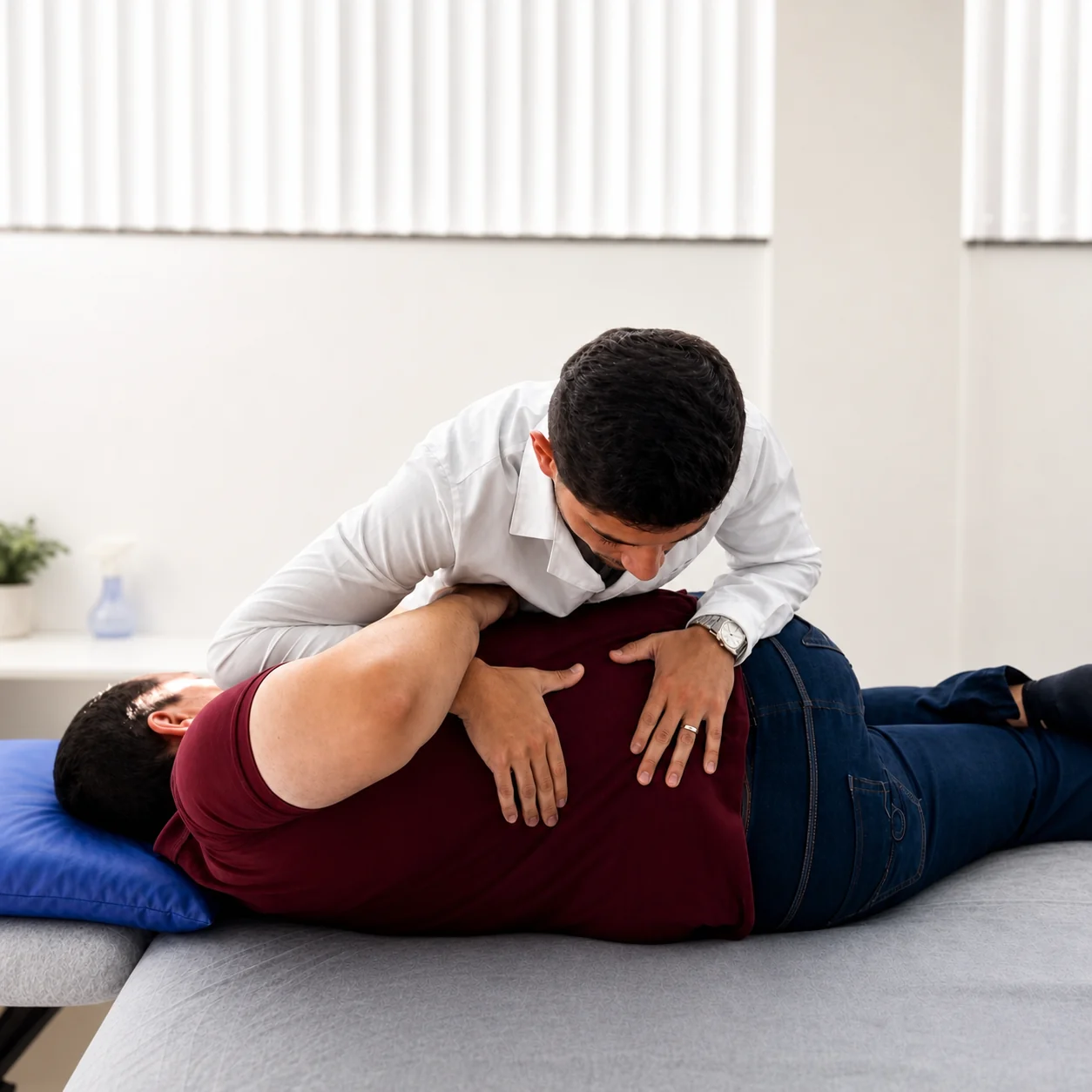
Every so often someone shows up curious about chiropractic and gets stuck on a single doubt: that pop. Maybe you have heard about manipulation techniques, seen a video online, or a neighbor told you they tried it and loved it, and even so the idea of the noise makes you hesitate. Take a breath. You are not alone in this. And it is very worth understanding what actually happens there before you decide anything.
What that noise is (and why it happens)
The technical name for the pop is cavitation. During a manipulation technique, the pressure inside the joint changes, and that sound can appear when a small bubble forms or dissolves in there. That is all. Nothing mechanically frightening behind it. The sound may or may not happen, depending on that phenomenon, and the technique keeps doing its job with or without it.
No, it is not your spine “going back into place”
This is where the biggest confusion lives. A lot of people believe the pop means the spine “went out and went back into place”, that the joint “lined up”, or, in the opposite fear, that something “got hurt”. None of those explanations holds.
The pop is not your spine clicking into place, and it is not an injury happening. It is only cavitation, a pressure change inside the joint.
In the hands of a qualified professional, these techniques, used in chiropractic, in osteopathy, and in Manual Therapy, are safe. The noise, when it shows up, is a consequence, not the goal of care.
What if I still do not want the pop?
Good news: you can look after your pain without going through that. There are two main paths, and they are usually told apart like this:
- Manipulation: fast, short movements, without needing to repeat them many times on the same joint. This is the technique most tied to the pop.
- Mobilization: movements of varied range, from small to large, repeated for a few seconds or even minutes. A lot of people prefer this path because there is no sudden movement and because they feel in control of how it is done.
Fear of the noise does not have to be a reason to put off care for your pain. There is more than one way in.
Is one technique better than the other?
No. The two have similar effects. What changes the result is the assessment, the professional’s experience, your specific case, and your preference. People who have already had good responses to manipulation tend to stick with it. People who prefer a slower, more controlled pace tend to do better with mobilization. There is no “right” technique in a vacuum. There is the one that fits you, and that only becomes clear when someone hears your story and examines your case.
The next step is a conversation
Fear of the pop does not have to keep you away from treating what is bothering you. Understanding what this noise is already takes away a good part of the worry, and knowing there are alternatives takes away the rest. If you are in pain, or you are being treated for an injury, the best path is to book a session, where the cause can be looked into, your preferences can be talked through, and you can choose together an approach you feel comfortable with.
Still wondering where the pain comes from?
A session looks for the source and what to do about it. Message us on WhatsApp.
Message on WhatsAppWritten by Dr. Dyogo Oliveira
Share on WhatsApp