Disc herniation without surgery: can it be treated?
In most cases, a disc herniation can be treated without surgery, and understanding why changes how you face the diagnosis.

Dr. Dyogo Oliveira
Physiotherapist, founder of the clinic
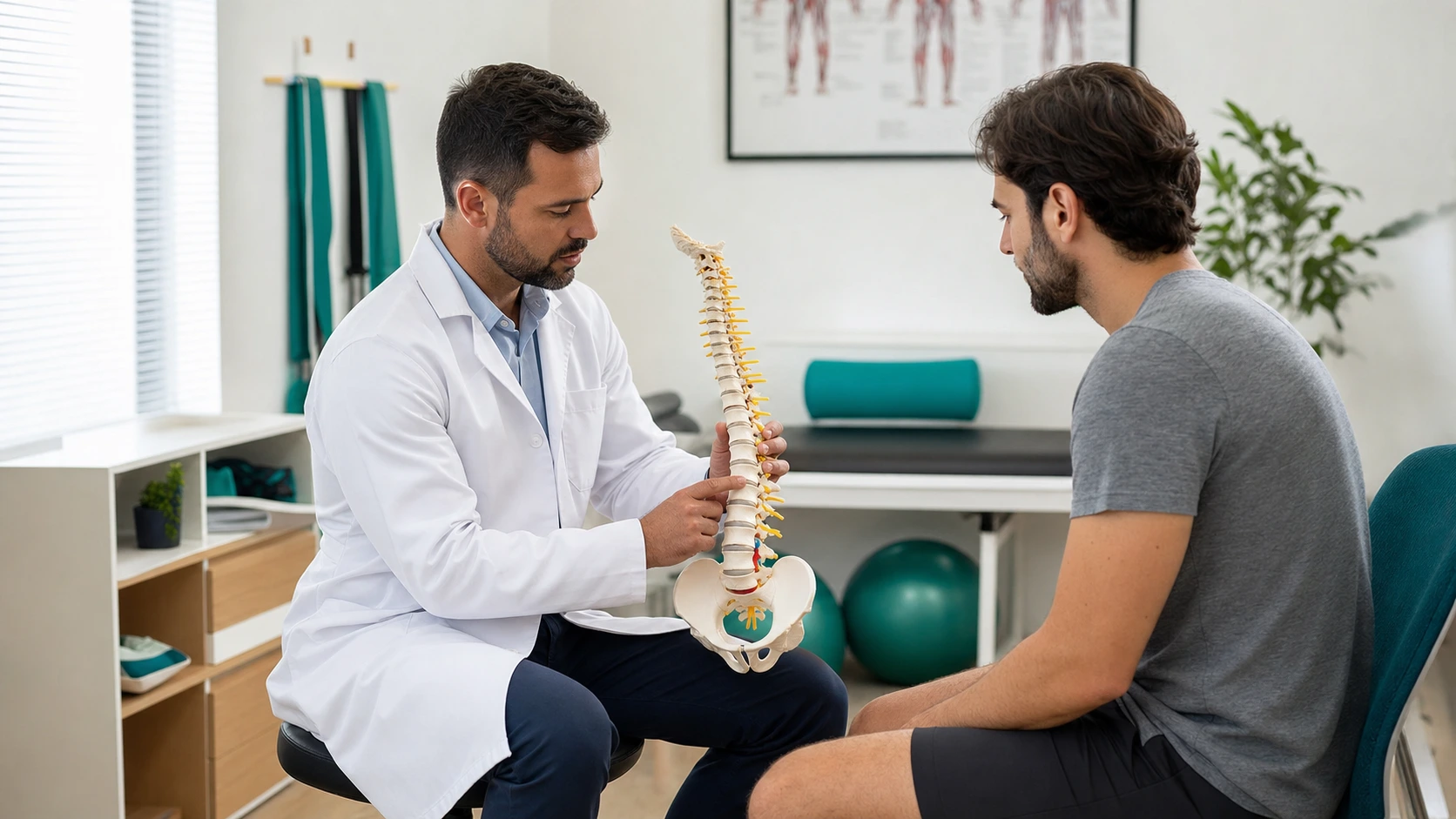
You had an MRI, read the words “disc herniation” on the report, and left the office already picturing the date of surgery. Breathe. This is one of the most common questions I hear, and it comes not only from patients, but sometimes from health professionals too: can a disc herniation be treated without operating? In most cases, yes. And it is worth understanding why before you make any decision.
What a disc herniation actually is
A picture helps. Think of a piece of chewing gum: there is an outer part, firmer and fibrous, and a more liquid filling in the middle. The disc in your spine is similar. When part of that filling shifts, we call it a herniation.
This is where a dangerous misunderstanding lives. A lot of people start imagining a fragile spine that will “leak” with any movement, and they stop moving out of fear. It is not like that. The spine and the discs are very tough structures. They handle the load of daily life and even a fair amount of weight. Staying still out of fear usually gets in the way more than it helps.
Your body tries to sort itself out
There is a phenomenon called spontaneous resorption. In plain language: the body itself reacts to contain the material that shifted and, over time, resorbs a good part of it. That is not a promise. It is something science has already observed and measured.
A review published in the journal Pain Physician (2017) gathered studies that found spontaneous resorption of the herniation in around 83% of cases in the United Kingdom and 67% in Japan.
There is a detail that often surprises people: some studies point out that the larger the herniation, the higher the chance of resorption was. The size on the scan is not always the villain it seems to be.
Your imaging does not tell the whole story
So do not let the report scare you. The MRI is one part of the assessment, not the final sentence. In the office, the clinical exam (how you move, where it hurts, what eases it and what makes it worse) usually says more about your case than the image alone. Two people with similar reports can have completely different stories.
Why start with conservative care
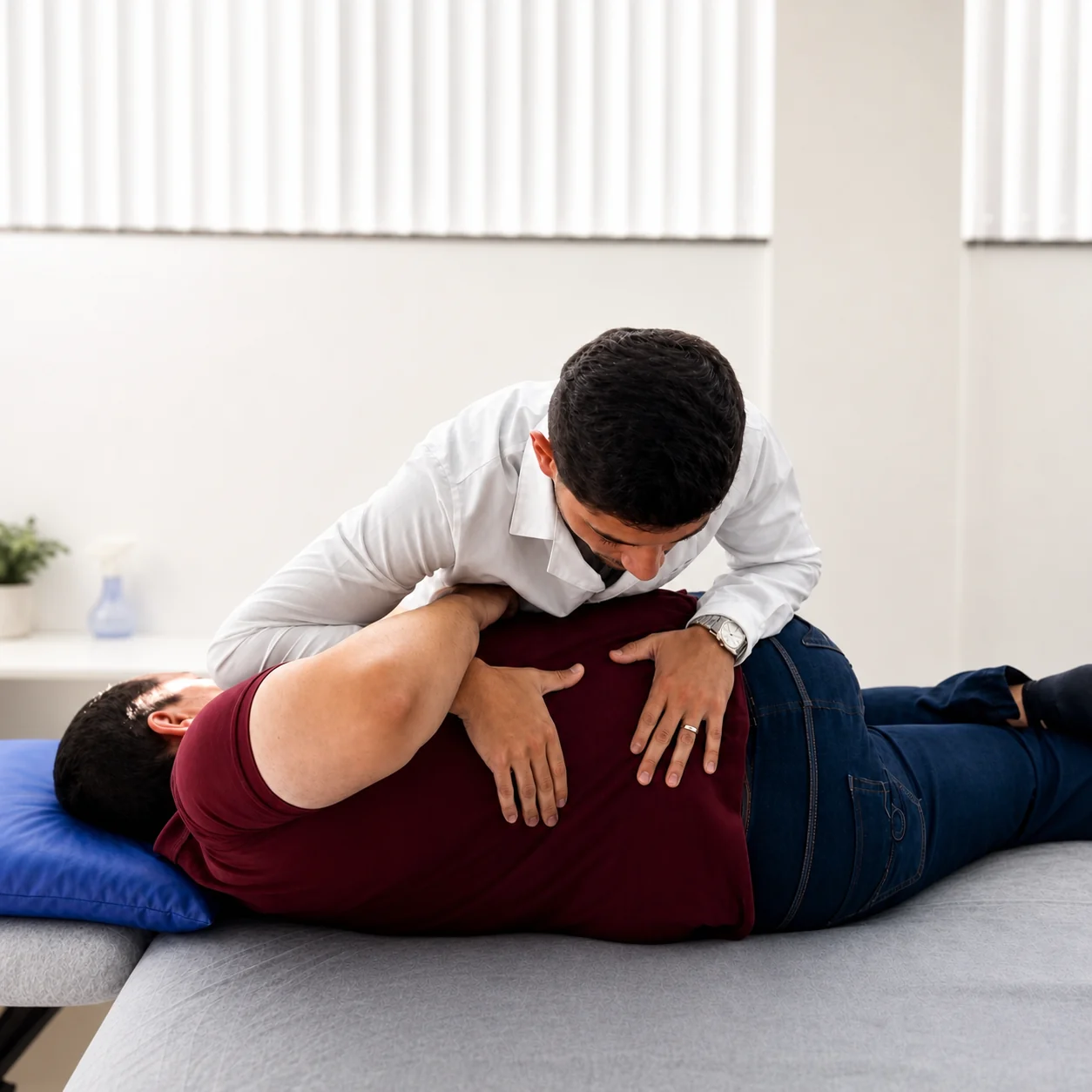
Precisely because of spontaneous resorption, in many cases surgery has not been shown to be better than conservative care, the kind that involves specialized physiotherapy, Manual Therapy, and exercise. Starting there makes sense for a few reasons:
- It can reduce complications that a surgery would bring
- It tends to be less invasive and more accessible
- It works on your quality of life while your body responds
The reference that shows up in the studies is to give conservative care some time, somewhere between four and eleven months, on average. If there is no improvement in that period, if the picture stays or gets worse, then surgery comes in as a serious recommendation. And this needs to be clear: for some cases, surgery is essential. The best path almost always runs through different health professionals talking to each other, with one goal only, your recovery.
The first step
If you received this diagnosis and you are caught between fear and hurry, the start is not a decision about surgery. It is understanding your case calmly, in an assessment that looks past the report. From there it is much easier to choose the path with a clearer head. If you want to talk about your situation, I am here in Pindamonhangaba to help you look into the cause of your pain and build a plan on your own timeline.
Still wondering where the pain comes from?
A session looks for the source and what to do about it. Message us on WhatsApp.
Message on WhatsAppWritten by Dr. Dyogo Oliveira
Share on WhatsApp