
Have you heard of chiropractic? Here is what it actually is
Chiropractic became a synonym for lining up the spine, but it goes beyond the pop. Here is what it is, who it tends to help, and when a session is worth booking.

Dr. Dyogo Oliveira
Physiotherapist, founder of the clinic
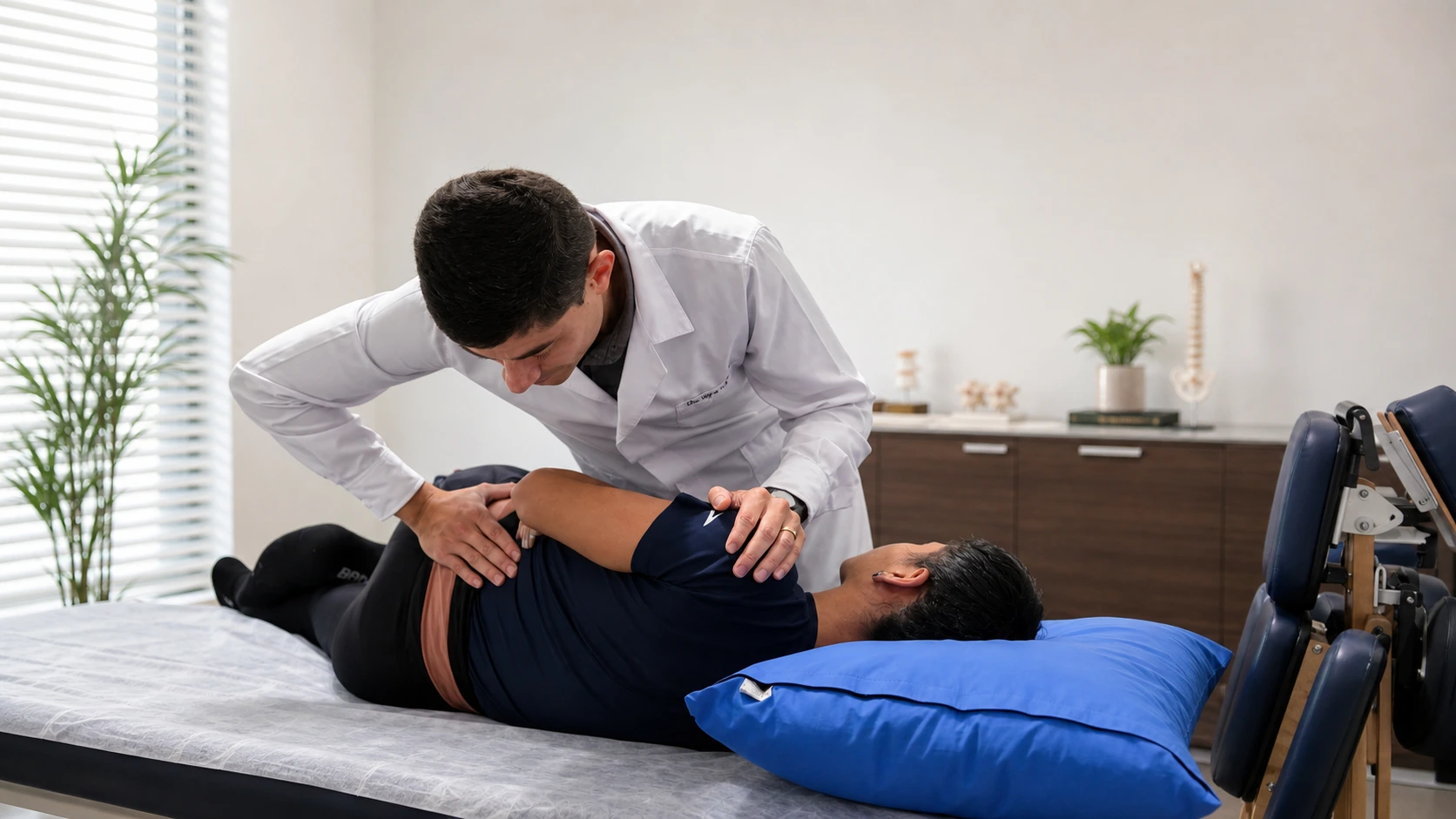
Maybe you have already heard someone say they went to “line up the spine”, or that they had a session to “crack the back” and walked out feeling lighter. Chiropractic comes up a lot when the topic is spinal pain, and it still raises plenty of doubt: what it is, where it comes from, who it is for, and why so many people tie the treatment to that pop. If you live with a pain that keeps coming back, it is worth understanding what this actually is before you decide to seek help.
What chiropractic is, in practice
Chiropractic is a type of care that began in the United States and works with Manual Therapy techniques, mainly the joint adjustment, also called manipulation. That is where popular phrases like “line up the spine” or “crack it” come from. The goal is not the noise. It is to use the hands to help the body recover movement, or keep the movement it already has.
One important point: chiropractic looks at the spine, but not only at the spine. The idea is to see the body as a whole, and to understand that a complaint in one place can be tied to what is happening somewhere else. That is why the starting point is usually to understand the case, not to start adjusting on the first move.
What it is usually used for
Chiropractic is used for muscle pain and for joint pain, and it has stood out in complaints linked to the spine. Among the most common situations are:
- Disc herniation and disc protrusion
- Sciatic nerve pain
- Low back pain (pain in the lower back)
- Neck pain (pain in the neck)
- Headaches
- Muscle contractures and tension
An honest reminder: each case is its own case. Chiropractic does not promise that the pain will be gone overnight. It looks into where the pain comes from and works to ease the discomfort and give movement back. What works well for one person may need a different approach for another, and only an individual look shows that.
Chiropractic does not treat only the spot that hurts. It tries to understand why that pain showed up.
It does not stop at the spine
A lot of people know chiropractic only for the reputation of “looking after the back”, but it goes further than that. Manual Therapy techniques address the whole body and can be part of care for other joint and muscle complaints. For people who train, that wider look also speaks to performance, helping with tension and limits that get in the way of movement in daily life and in training.
That is why chiropractic often sits alongside other parts of care, such as physiotherapy and Clinical Pilates. Isolated pain in one corner is not the whole job. The body works together, and the care does too.
And that pop. Does it scare you?
The pop is the part that draws the most curiosity and, sometimes, a bit of unease. It belongs to the joint adjustment, a manual technique applied by a qualified professional, inside a prior assessment of your case. The focus is never to force the spine to crack. It is to guide the movement with care. Feeling unsure before the first session is normal, and talking about that with the professional is part of the process.
When a session is worth booking
If pain in the back, pain in the neck, or that “locked up” feeling has already become a constant companion, the better path is to stop guessing and book a session. That is where the origin of the complaint gets understood, and where it becomes clear whether chiropractic is indicated for your case or whether it is worth combining it with other approaches.
Care happens in downtown Pindamonhangaba, by appointment, with Dr. Dyogo Oliveira (CREFITO-3/275939-F), who has a specialization in Trauma and Orthopedics and training in Manual Therapy, Dry Needling, and Clinical Pilates. If you still have a question, or you want to understand what is behind your pain, it is worth booking a session and talking through your case.
Still wondering where the pain comes from?
A session looks for the source and what to do about it. Message us on WhatsApp.
Message on WhatsAppWritten by Dr. Dyogo Oliveira
Share on WhatsApp